
Security & Alarm Installation in Sydney & the Sutherland Shire
The physical and electronic layers of a secure site. We specify and install detection and door hardware — PIR detectors, reed switches, maglocks, electric strikes and mortise locks — and the alarm systems that tie them together: intruder and burglar alarms, duress and panic, emergency lockdown and PA/paging on Inner Range, Bosch and Gallagher. Everything is wired back to one head-end so detection, locking and alarms work as a single system.
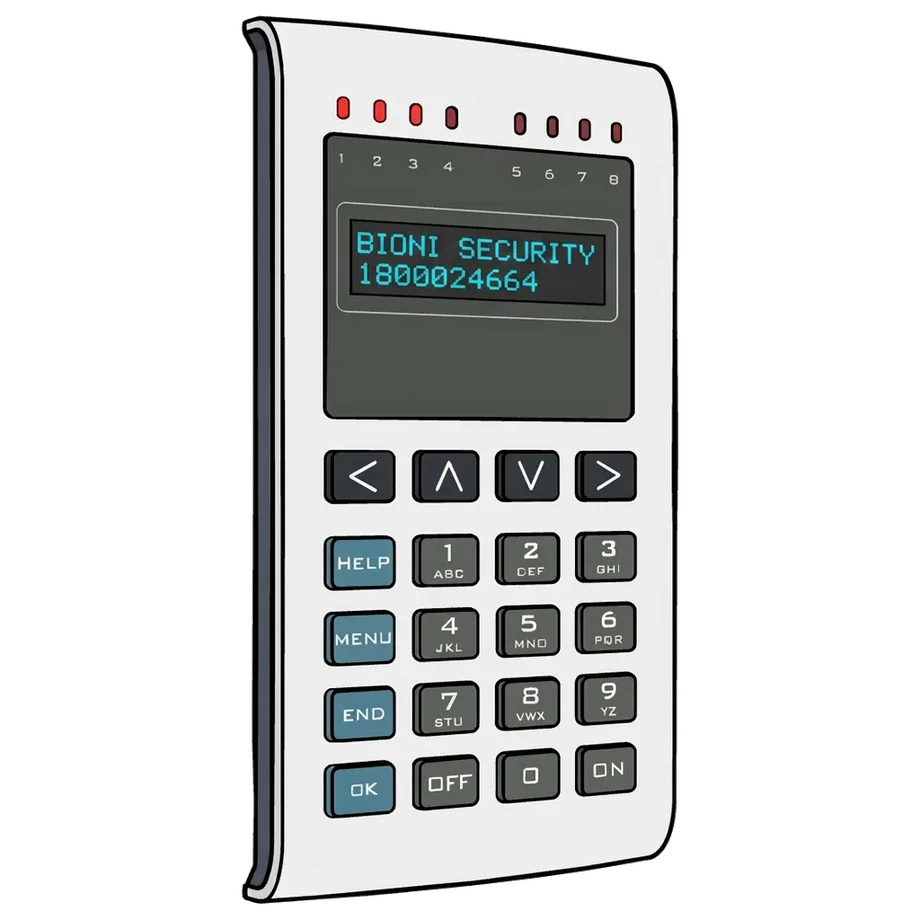
Monitored alarms
Your site, armed and answerable
Coded keypads, fobs and app control; movement, door and glass-break detection; sirens and strobes; and optional back-to-base monitoring. We design, install and commission the whole system — then show you exactly how to run it.
- Keypads, fobs & app arming
- PIR, reed & glass-break sensors
- Sirens, strobes & duress
- Optional back-to-base monitoring
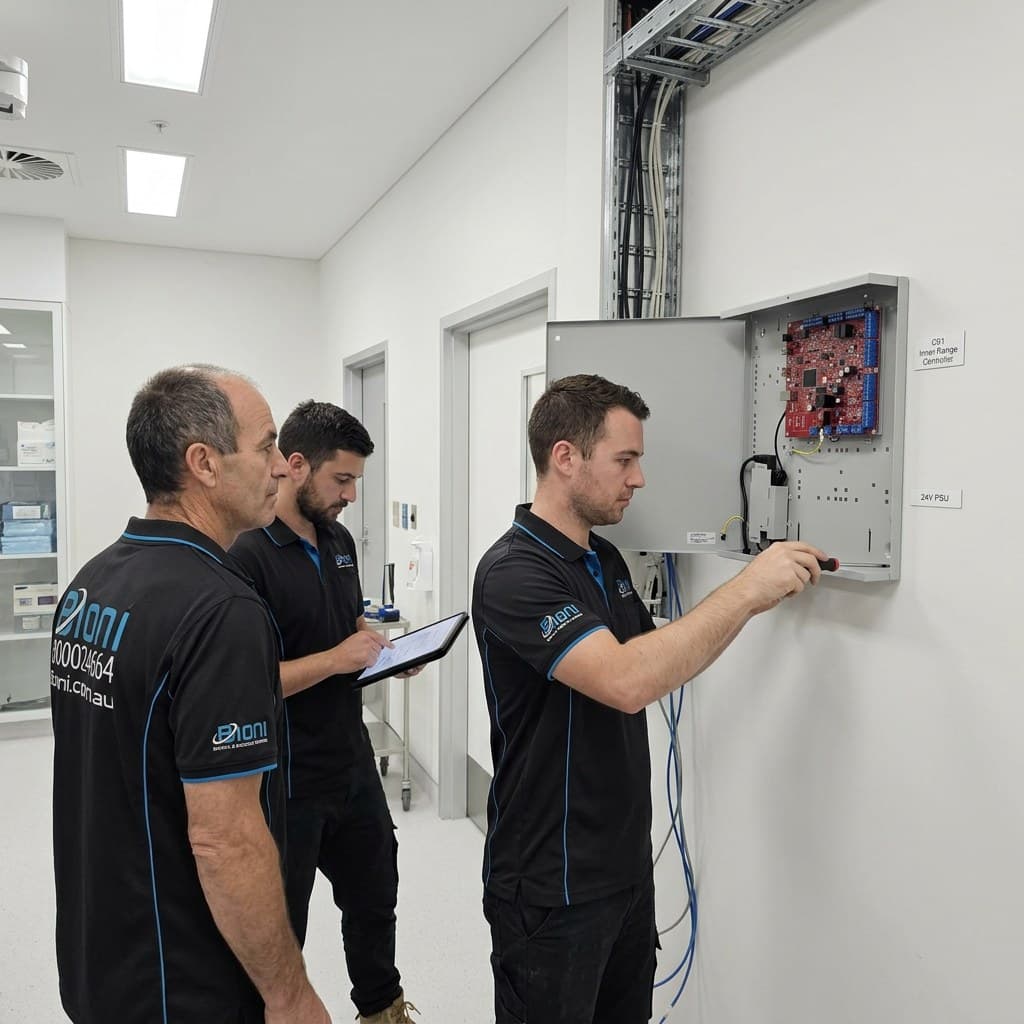
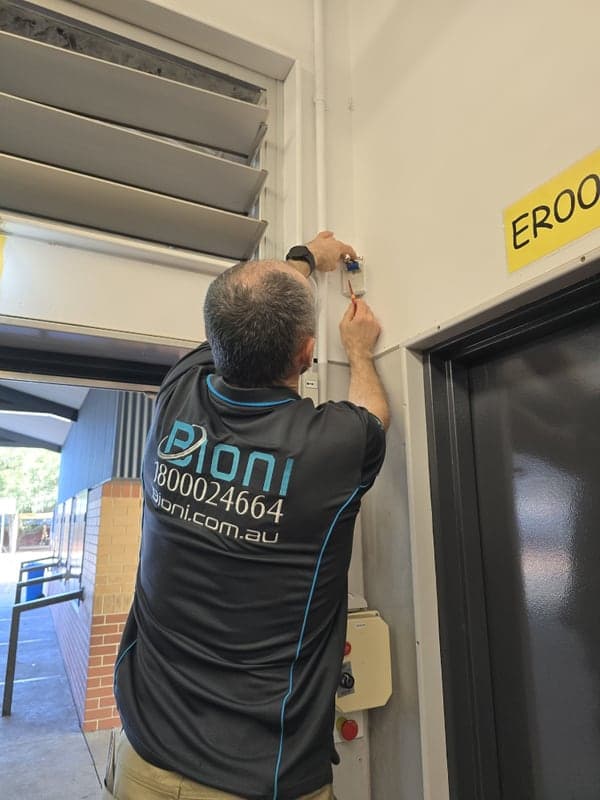
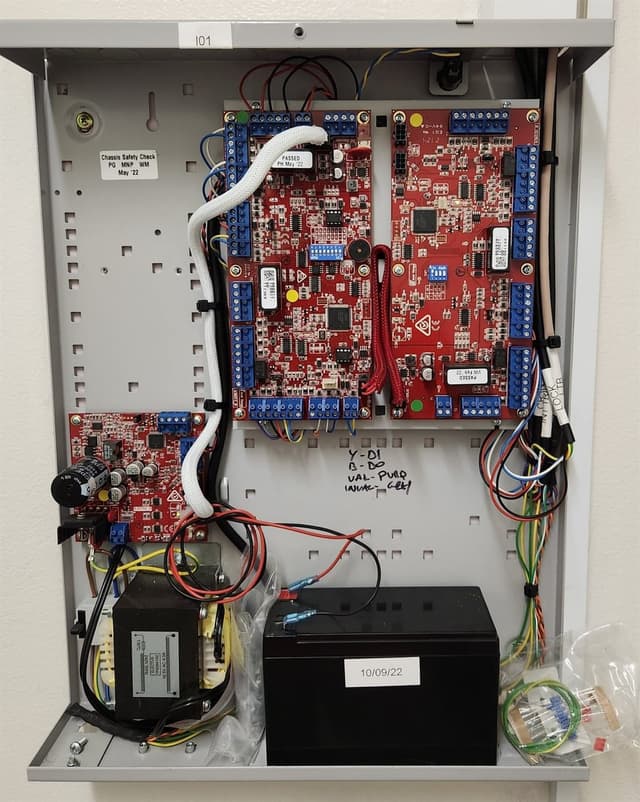
Bioni Security & Electrical installs intruder alarms, detectors, locking hardware, duress and lockdown systems on Inner Range, Bosch and Gallagher for homes, schools, medical practices, warehouses and offices across Sydney, St George and the Sutherland Shire. One team holds both NSW security master and electrical contractor licences, so it installs, certifies and maintains the whole system.
Most break-ins are decided in the first thirty seconds, which is why we design the detection layer before we talk panels. PIR and dual-tech detectors cover the rooms that matter, reed switches watch the openable doors and windows on the perimeter, and the locking hardware — maglocks, electric strikes, electric mortise locks — is chosen for how each door has to behave, not for what's on the shelf. The head-end is an Inner Range, Bosch or Gallagher panel depending on the site: a straightforward Bosch panel for a house, Inner Range or Gallagher where alarms, doors and lockdown need to run on one platform. Schools and healthcare sites get duress, emergency lockdown and PA/paging engineered in from the start rather than bolted on later.
We install for homes, schools, medical practices, warehouses and offices across Sydney, St George and the Sutherland Shire from our Caringbah base. One licensed team holds both the NSW security and electrical licences, so the detectors, locking hardware, panel power and any switchboard work are done by the same crew — no second contractor to coordinate, and the electrical side is certified before we leave.
Security & Alarms: what's included
- PIR and dual-tech detectors, reed/door switches
- Maglocks, electric strikes, electric mortise locks
- Request-to-exit, break-glass and fail-safe/fail-secure logic
- Intruder / burglar alarm design, install and service
- Duress, panic and emergency lockdown (schools, healthcare, corporate)
- PA / public-address and paging
- Tidy containment and labelling to NSW standards
Security & Alarms: how we work
Free site visit
We walk every door, window and approach with you, note which openings need detection versus locking, and flag anything — ceiling access, existing alarm cabling, egress doors — that changes the design. Free within 100 km of Caringbah.
Design & itemised quote
You get a zone-by-zone schedule: every detector, reed, lock and keypad listed with its location, plus the panel, power supplies and cabling runs — all itemised ex-GST so nothing hides in an allowance.
Installation
Detectors mounted and aimed for real coverage, reeds fitted to doors and windows, locks installed with the correct fail-safe or fail-secure mode for each door, and everything cabled back to the panel in tidy, labelled containment.
Commissioning & handover
We walk-test every zone, verify locking behaviour against each door's egress requirements, program user codes and arming schedules with you, and hand over as-installed documentation plus the CCEW for the licensed electrical work.
Optional maintenance
An annual service checks panel and detector batteries, walk-tests every zone, exercises the locking hardware and confirms the panel reports correctly — cheap insurance on a system you hope never has to fire.
Compliance & licensing
Bioni Security & Electrical holds NSW Security Master Licence 000108088 and NSW Electrical Contractor Licence 350318C, so both the security installation and the 240 V work behind it — panel supplies, lock power, new circuits — are carried out by one licensed contractor, with a Certificate of Compliance for Electrical Work (CCEW) issued for the licensed electrical work.
Intruder alarm systems are designed with reference to AS 2201.1, and electronic locking is always checked against each door's egress and accessibility requirements before we choose fail-safe or fail-secure hardware — a locked exit is never an acceptable trade-off. Fire detection carries its own compliance regime (AS 1670 / AS 1851) and is quoted separately; we don't fold it into an intruder alarm scope.
A recent job
A medical practice in Kogarah
A two-storey general practice in Kogarah came to us after a break-in through a rear window — no alarm, medication storage on site and staff opening up alone at 7 am. We installed a Bosch panel with dual-tech detectors through the consult rooms and reception, reed switches on the rear door and ground-floor windows, and an electric strike on the staff entry so the door locks behind people automatically instead of relying on habit.
Reception got a fixed duress button and two wearable pendants, wired as 24-hour zones so they work whether the system is armed or not. The practice manager arms and checks the system from an app, opening staff disarm on personal codes, and the panel is ready for back-to-base monitoring whenever the practice wants to add it. The whole job ran over two days without closing the clinic.
What moves the price
Every alarm and security quote is itemised ex-GST — you see each detector, lock and cable run on its own line. What moves the number:
- Zone count — how many detectors, reeds and duress points the site needs, which follows the floor plan, not the floor area
- Door hardware grade — a surface-mount electric strike, a monitored maglock and an electric mortise lock sit at very different price points
- Panel platform — a residential Bosch panel and an Inner Range or Gallagher controller are different classes of head-end; we quote the one the site justifies
- Cabling — accessible ceilings and reusable alarm cabling keep costs down; solid floors and long runs push them up
- Duress, lockdown and PA scope — a couple of duress buttons is minor; campus-wide lockdown and paging is its own layer of design
- Existing equipment — sound cabling, reeds and takeover-friendly panels can often be reused; we assess this at the site visit
Tell us what the system actually has to protect — we'd rather cover the real risks properly than spread a budget thin across every wall.
Frequently asked
- Do you work to a fail-safe or fail-secure design?
- Both — the right choice depends on the door's egress and fire requirements. We confirm the locking mode against the building's exit obligations before we install.
- Can you integrate locks and alarms with my existing access control?
- Yes. We wire locking hardware and alarm devices back to Gallagher, Inner Range or Bosch controllers so doors and alarms are managed from your existing platform.
- Do you offer back-to-base monitoring?
- Monitoring arrangements are available — the specifics are confirmed per site. Ask us and we'll outline the options for your alarm platform.
- Do you install fire detection systems?
- Fire detection in NSW carries its own compliance regime (AS 1670 / AS 1851). We publish only what we're accredited to deliver — please contact us to discuss scope.
- How long does an alarm installation take?
- A typical house is a day; a commercial site with locking hardware, duress and lockdown usually runs two to five days. We confirm the schedule with the quote and stage the work so the site is never left unsecured overnight.
- Can you take over or upgrade my existing alarm?
- Usually. Sound cabling, reeds and often the detectors can be reused, and many panels can be swapped without rewiring the site. We assess what's salvageable at the site visit and quote the takeover against a fresh install so you can compare like for like.
- What warranty and servicing do you provide?
- Hardware carries the manufacturer's warranty and our workmanship is guaranteed. An optional maintenance plan adds annual walk-tests, battery replacement and lock servicing so faults are found on a service visit, not during a break-in.
- Why use a licensed installer instead of a DIY kit?
- DIY kits skip the parts that matter: correct detector placement, monitored locking hardware and reliable power. Security installation work in NSW is licensed, and any 240 V wiring must be done by a licensed electrician — we hold both licences and certify the work.
Reviews from Google
What our customers say.

We couldn’t be happier with the work and service provided by Bioni Electrical and Islam in particular. He has completed a number of jobs around our home and every time the quality of his work and attention to detail have been outstanding. He installed a new antenna, replaced and upgraded lights throughout the house, installed garden lighting in the backyard and carried out all the electrical work required when we converted a garage into a music studio. He also recently helped us with the installation of a heated towel rail. What really impressed us was not only the quality of the workmanship but how functional, neat and well thought-out everything was. He was reliable, professional, knowledgeable and always took the time to make sure the job was done properly. We have been extremely impressed with the level of service and would have no hesitation recommending Bioni Electrical to anyone looking for a reliable and skilled electricians. We will definitely be using their services again in the future.

Absolutely outstanding service! They installed an EV charger for my Mazda 6e and had previously completed other electrical work for us. Everything was done professionally, neatly and to the highest standard. Reliable, friendly and excellent value. Highly recommended!

Great service - very professional and extremely efficient, highly recommend!

Recently had Bioni install an alarm system at our business and couldn't be happier. Andrew and the crew turned up on time, worked cleanly, and took the time to walk me through exactly how everything works before they left. No mess, no pressure, and the pricing was upfront with no surprises. It's been running perfectly since. Would recommend to anyone looking to secure their place!

Great service from start to finish. Thanks guys.
Where we do this work
Security & Alarm Installation in Caringbah, Cronulla, Miranda, Sutherland, Gymea, Sylvania, Menai, Hurstville, Kogarah, Rockdale, Sydney CBD, Eastern Suburbs, Inner West — and the rest of our service areas.
Licences, registrations and coverage
- Installing since
- 2013
- NSW Security Master Licence
- 000108088
- NSW Electrical Contractor Licence
- 350318C
- ABN
- 86 628 597 946
- NSW Government supplier
- 12432577
- Depots
- Caringbah & Nowra
- Free site visit
- Within 100 km